

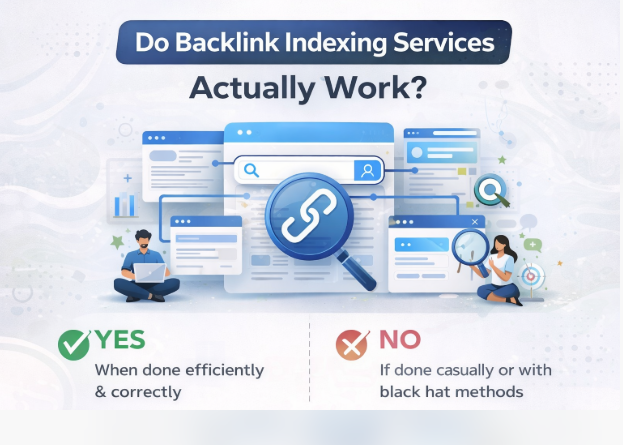

Do Backlink Indexing Services Actually Work?
Yes, backlink indexing services do work to force search engine bots to crawl your links faster. However, they cannot force Google to index a low-quality, spammy, or thin page. These tools are highly effective for indexing Tier 2 backlinks and Web 2.0 properties, but high-quality white-hat guest posts should index naturally without paid services. If a premium link isn't indexing, the problem is usually the content quality or the referring domain's crawl budget, not the lack of an indexer.
If you are actively building links in 2026, you already know the frustration. You spend hundreds of dollars on a guest post, or hours negotiating a niche edit, only to check Ahrefs or Google Search Console weeks later and see... nothing. The link is practically invisible.
Because of the sheer volume of AI-generated content flooding the web today, Google has heavily restricted its crawl budget. It no longer indexes everything it finds. In fact, industry data suggests that a massive percentage of newly built backlinks are entirely ignored by search engines for weeks or months.
This bottleneck has led to a surge in SEOs turning to backlink indexing services. But do these tools actually work, or are they digital snake oil?
In this comprehensive guide, we are going to bypass the sales pitches and dive into the mechanics of how these tools operate. We will explore the massive gap competitors miss—the Bing IndexNow protocol versus the Google Indexing API—and outline exactly when you should use an indexer, when you should avoid them, and how Stayplain Studio can help you navigate your broader SEO strategy.
What Are Backlink Indexing Services?
At their core, backlink indexing services are automated tools designed to alert search engines that a new web page (containing your backlink) exists, prompting their crawler bots—like Googlebot and Bingbot—to visit the page.
Think of an indexing tool as a digital flare gun. If you drop a backlink on a deep, orphaned page on a massive website, Google might not naturally find it for months because it has no reason to crawl that specific URL. The indexing service fires a flare to get the bot's attention.
The Mechanics: How Indexers Actually Force a Crawl
Modern indexing tools do not possess a magic "index" button. Instead, they leverage a combination of technical triggers to force a bot visit:
-
API Integration: The most powerful tools utilize search engine APIs (which we will discuss in depth later) to directly submit URLs to the search engine's queue.
-
Traffic Networks & Micro-sites: Premium indexers maintain massive networks of established, high-crawl-rate blogs. They temporarily post your unindexed URL on their homepage or a high-traffic widget. When Googlebot crawls their high-authority site (which happens daily), it finds your link and follows it.
-
Social Signals: Tools often auto-publish your unindexed links to high-authority social bookmarking platforms, Reddit, or X (formerly Twitter). The resulting social signals and Chrome browser data can trigger Google to investigate the URL.
-
Pinging and RSS Feeds: While largely considered a legacy tactic, some tools still "ping" search engine servers via XML-RPC to announce that a page has been updated.
The Biggest SEO Misconception: Crawled vs. Indexed
To understand if an indexing service "works," you must first understand the fundamental difference between crawling and indexing. This is where most SEOs get confused.
An indexing service can guarantee a crawl. It cannot guarantee an index.
| Feature | Crawling | Indexing |
| Definition | The search engine bot visits the page, reads the HTML, and discovers the links on it. | The search engine decides the page is valuable, stores it in its database, and makes it eligible to rank in search results. |
| Can Tools Force It? | Yes. Indexing services are highly effective at forcing Googlebot to visit a URL. | No. Google's algorithm has the final say. If the page is garbage, it will not be indexed. |
| Search Console Status | Discovered - currently not indexed | Indexed, not submitted in sitemap |
| SEO Value | Zero. If a link is only crawled but not indexed, it passes no PageRank. | High. The link now actively contributes to your domain authority and rankings. |
If you run a link through an indexer and it still doesn't show up on Google, the tool likely did work—Googlebot visited the page. But Google looked at the page, decided it was thin, duplicated, or spammy, and tossed it out.
Do Backlink Indexers Actually Work? (The Reality Check)
The short answer is yes, they execute their intended function. However, their usefulness depends entirely on your specific link-building strategies.
When Indexing Services Work Brilliantly
-
Tier 2 and Tier 3 Link Building: If you are building tiered links (e.g., pointing cheap Web 2.0s or automated links to your main guest post to boost its power), an indexing service is mandatory. Google will rarely find or care about a random Blogspot page naturally. You need an indexer to force the crawl and pass the juice up the chain.
-
Niche Edits on Orphaned Pages: If you secure a link insertion on a blog post published four years ago, Google might only crawl that specific URL once every six months. An indexer forces Google to recognize the new link immediately.
-
Parasite SEO: When you publish content on massive platforms like Medium, LinkedIn, or high-authority forums, the sheer size of the platform means your specific post might get lost in the shuffle. Indexers work incredibly well here because the host domain already has massive authority.
When Indexing Services Fail Completely
-
Spam and Spun Content: If the page hosting your backlink is filled with unreadable, heavily spun text, or purely low-effort AI garbage, Google's Helpful Content system will reject it. No tool can override a quality filter.
-
JavaScript Rendering Traps: If your link relies on complex client-side JavaScript to load, the bot might crawl the initial HTML but fail to render the link.
-
Technical SEO Roadblocks: If the host webmaster accidentally left a
noindextag on the page, or blocked crawlers viarobots.txt, an indexing tool is useless.
The Reddit Reality Check: Are Indexers Safe for White Hat SEO?
If you search forums or Reddit for advice on backlink indexers, you will find a vocal cohort of SEOs calling them a complete waste of money. They aren't wrong, but they are speaking strictly from a "White Hat" perspective.
For purely white-hat SEO—where you are earning links organically or securing highly relevant guest posts on authoritative, high-traffic websites—you do not need an indexing service. In fact, using an aggressive indexing tool on a premium link can sometimes leave an unnatural footprint. If you secure a link on Forbes or a major industry publication, Google is already crawling that site multiple times a day. Your link will be indexed naturally within 24 to 48 hours.
Using an indexer on these links is redundant. The general rule is: If a link is high-quality enough to require a manual outreach email, it is high-quality enough to index on its own. Indexers are a grey-hat tool designed for volume, velocity, and tiered structures.
For more insights on building sustainable, penalty-free authority, review Google's official Search Central Guidelines on link spam.
The Missing Opportunity: Bing IndexNow vs. Google Indexing API
Most generic articles on this topic miss the most critical technical evolution in modern link indexing. The landscape has completely fractured into two distinct engines: the open-source IndexNow protocol and the highly restricted Google Indexing API.
Understanding how indexing tools exploit these two systems is the key to knowing what you are actually paying for.
The Bing IndexNow Protocol (The Fast Track)
Spearheaded by Microsoft (Bing) and Yandex, IndexNow is an open protocol that allows webmasters to instantly notify search engines of the latest content changes.
-
How Tools Use It: Many modern indexing services lean heavily on IndexNow. Because the protocol is open and encourages immediate pings, indexers can get your backlinks indexed on Bing within minutes.
-
The Catch: While ranking on Bing is valuable, your primary goal is usually Google. Bing's index does not influence Google's index. Some tools market themselves as "instant indexers," but they are actually just showing you Bing results.
The Google Indexing API (The Risky Exploit)
Google has its own Indexing API, but it was built with a very strict purpose: to allow sites to push time-sensitive content, specifically job postings and live broadcast events.
-
How Tools Use It: Grey-hat indexing services exploit this API. They wrap your standard backlink URL in schema markup that temporarily disguises it as a "Job Posting" to force the Google API to accept it and send a crawler immediately.
-
The Risk: Google is fully aware of this exploit. While it often works to force an initial crawl, Google frequently does a subsequent check a few days later. When the algorithm realizes the page is just a blog post with a backlink (and not a job opening), it will often de-index the page and penalize the API quota of the account that submitted it.
This is why you might see a link index on Tuesday, only to vanish from Google by Friday. Relying on API-abuse tools is a game of cat-and-mouse.
4 Free Alternatives to Paid Link Indexers
Before spending a monthly subscription on an indexing tool, try these manual, free methods to trigger a crawl. These are the exact tactics many agency professionals use to nudge stubborn URLs into the SERPs.
1. Drive Real Social Traffic
Search engines use Chrome browser data and social signals as discovery tools. If real users are clicking a link, Google wants to know what it is.
-
Take the URL of the unindexed guest post and share it on your brand's X (Twitter), LinkedIn, or Facebook page.
-
Even better, run a $5 micro-ad campaign to send a burst of real human traffic to the URL. The Chrome user data will almost always force a crawl.
2. Leverage Google's Own Ecosystem (Cloud Links)
Google trusts its own properties implicitly. You can use Google Workspace to create a bridge for the crawler.
-
Open a public Google Doc or Google Sheet.
-
Paste your unindexed backlinks into the document.
-
Publish the document to the web.
-
Google's internal crawlers frequently sweep public Workspace documents, providing a seamless path directly to your target URLs.
3. Build Free Tier 2 Links
If a page lacks the authority to be indexed on its own, lend it some authority.
-
Create a free WordPress.com blog, a Medium account, or a Blogger site.
-
Write a short, highly relevant 300-word summary of the unindexed guest post.
-
Place a link within that summary pointing directly to the unindexed URL.
-
Because Medium and WordPress.com have massive inherent domain authority, Google crawls them constantly.
4. Ask for Better Internal Linking
Often, the reason a backlink isn't indexing is that the webmaster who sold you the link placed it on a "dead" page with no internal links pointing to it.
-
Reach out to the site owner.
-
Politely ask if they can add an internal link from their homepage, a category page, or a high-performing pillar post to the article containing your backlink.
-
A strong internal link passes existing page authority and directs the crawler straight to your link. If your broader website architecture needs work, a comprehensive SEO audit can identify internal linking gaps on your own domain.
Conclusion: Should You Use a Backlink Indexer?
The effectiveness of backlink indexing services is not black and white.
If your strategy relies on volume—such as massive local citation bursts, PR syndication, or complex tiered link structures—a paid indexer is a necessary utility to ensure your lower-tier efforts are actually recognized by search engines.
However, if you are focusing on high-quality, relevant placements on real websites, you are better off saving your money. Focus on the quality of the content surrounding your link and use free social signals to naturally guide Googlebot to your assets.
Need Help Dominating the Search Results? Consult Stayplain Studio
Link building and indexing are just small pieces of a much larger puzzle. If you are tired of building links that don't move the needle, or if your site is struggling to gain visibility despite your best efforts, you need a holistic strategy.
At Stayplain Studio, we specialize in cutting through the noise. Whether you need expert WordPress Website Designer that is technically sound from day one, or a dedicated Local SEO services campaign to dominate your local market, we build digital assets that search engines actually want to rank.
Don't leave your search visibility up to chance or grey-hat indexing tools. Contact Stayplain Studio today for a consultation, and let's build an SEO foundation that drives real, measurable growth.
[wpforms id="42328" title="true" description="true"]