

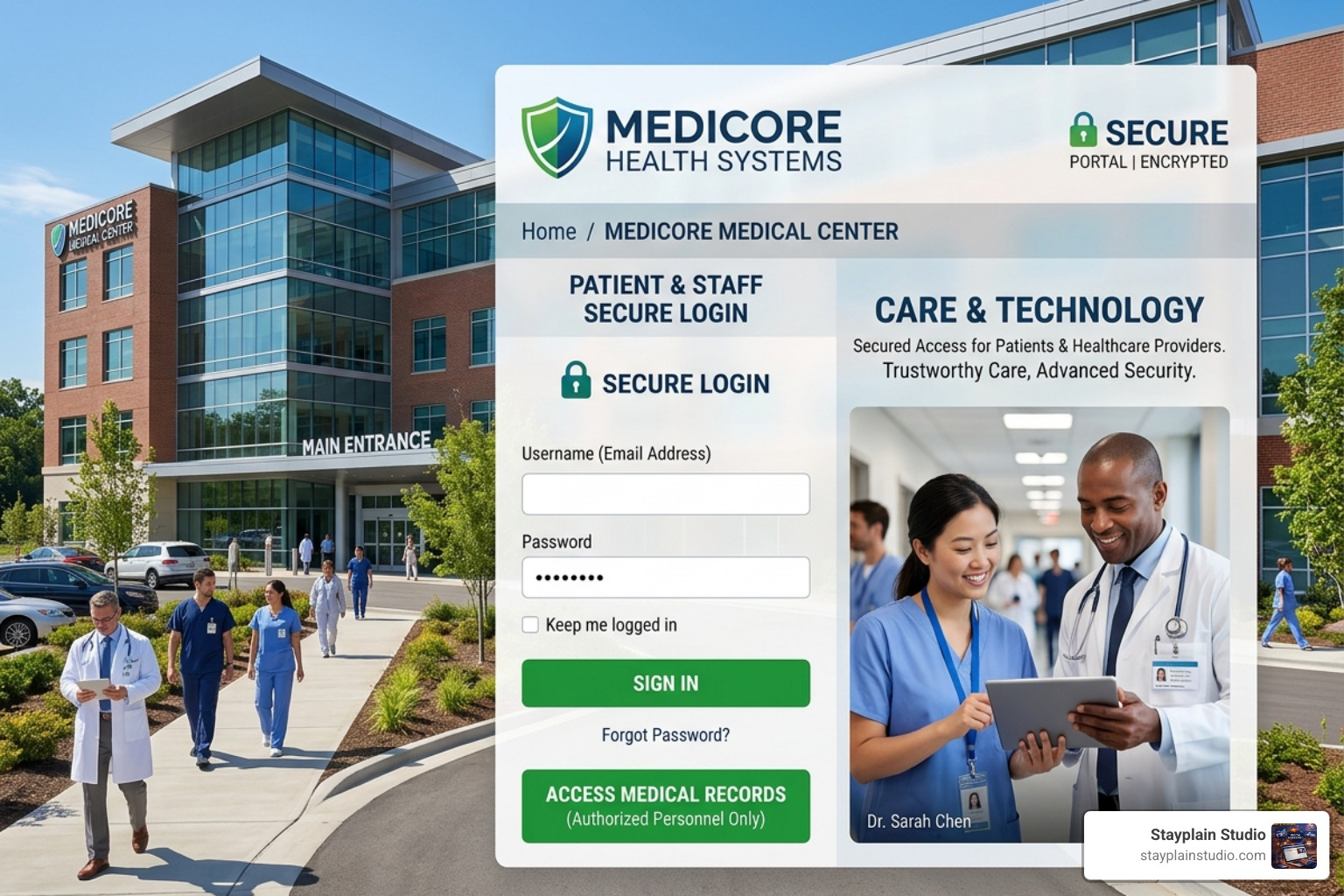

Everything You Need to Know About Secure Hospital Website Design
Why Secure Hospital Website Design Can Make or Break Patient Trust
Secure hospital website design is the practice of building healthcare websites that protect patient data, meet legal compliance standards, and deliver a fast, trustworthy experience.
As professional website creators, our team understands that a patient lands on your hospital's website during a stressful moment. They need to find a doctor, book an appointment, or access lab results. You have roughly 7 seconds to earn their trust. If your site looks broken or feels unsafe, they leave. This is why adhering to standards like the Health Insurance Portability and Accountability Act is vital for any medical institution.
Healthcare is one of the most targeted industries for cyberattacks. A single data breach can cost a hospital organization millions. Worse, many patients say they would switch providers after a breach. At Stayplain Studio, we've worked with healthcare providers to build websites that are both beautiful and locked down. Our website design for hospitals approach bakes security into every layer from day one.
Core Pillars of Secure Hospital Website Design
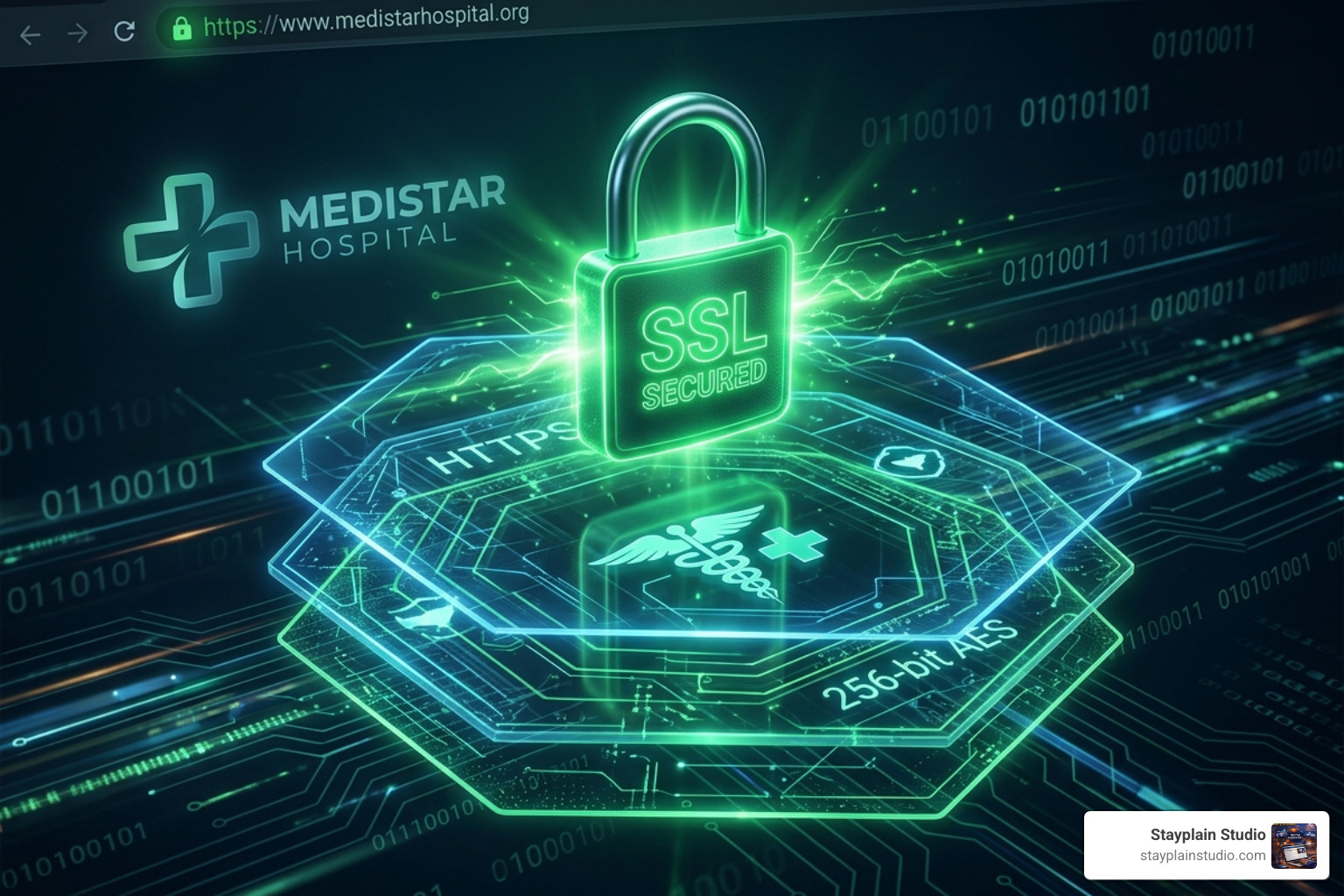
Building a secure hospital website requires a foundational understanding of its core pillars: confidentiality, integrity, and availability. These aren't just buzzwords; they are the technical safeguards that ensure a patient’s medical history remains private, accurate, and accessible when they need it most.
At Stayplain Studio, we don't just "make websites." We build digital fortresses. For comprehensive website design services in Ghana, we ensure these principles are embedded from the ground up, protecting your institution from the reputational and financial ruin that follows a data breach.
Implementing SSL and Encryption for Secure Hospital Website Design
If your website doesn't have a padlock in the address bar, you are essentially shouting patient data across a crowded room. Implementing Transport Layer Security (TLS) is non-negotiable. This protocol encrypts data in transit, making it unreadable to anyone trying to intercept it.
But we go further. We advocate for AES-256 encryption for data at rest—meaning even if a hacker gets into your database, the information is scrambled. By utilizing premium SSL certificates and enforcing HTTPS across every single page, we ensure that medical platforms remain a safe harbor for sensitive health information. We also implement field-level encryption for forms, ensuring that a patient’s name, phone number, and symptoms are secured the moment they hit "submit."
Mobile Responsiveness in Secure Hospital Website Design
Statistics show that 80% of healthcare searchers visit hospital sites on their mobile phones. If your site isn't mobile-responsive, you are turning away eight out of ten potential patients. Mobile design in healthcare isn't just about fitting text on a small screen; it’s about functionality under pressure.
Our team offers responsive website design services tailored to ensure your hospital's site is accessible and secure on any device. We focus on touch-friendly Call-to-Action (CTA) buttons, fast loading speeds, and thumb-zone navigation. A secure site that doesn't load on a smartphone is, for all intents and purposes, a broken site.
HIPAA Compliance and Data Protection Standards
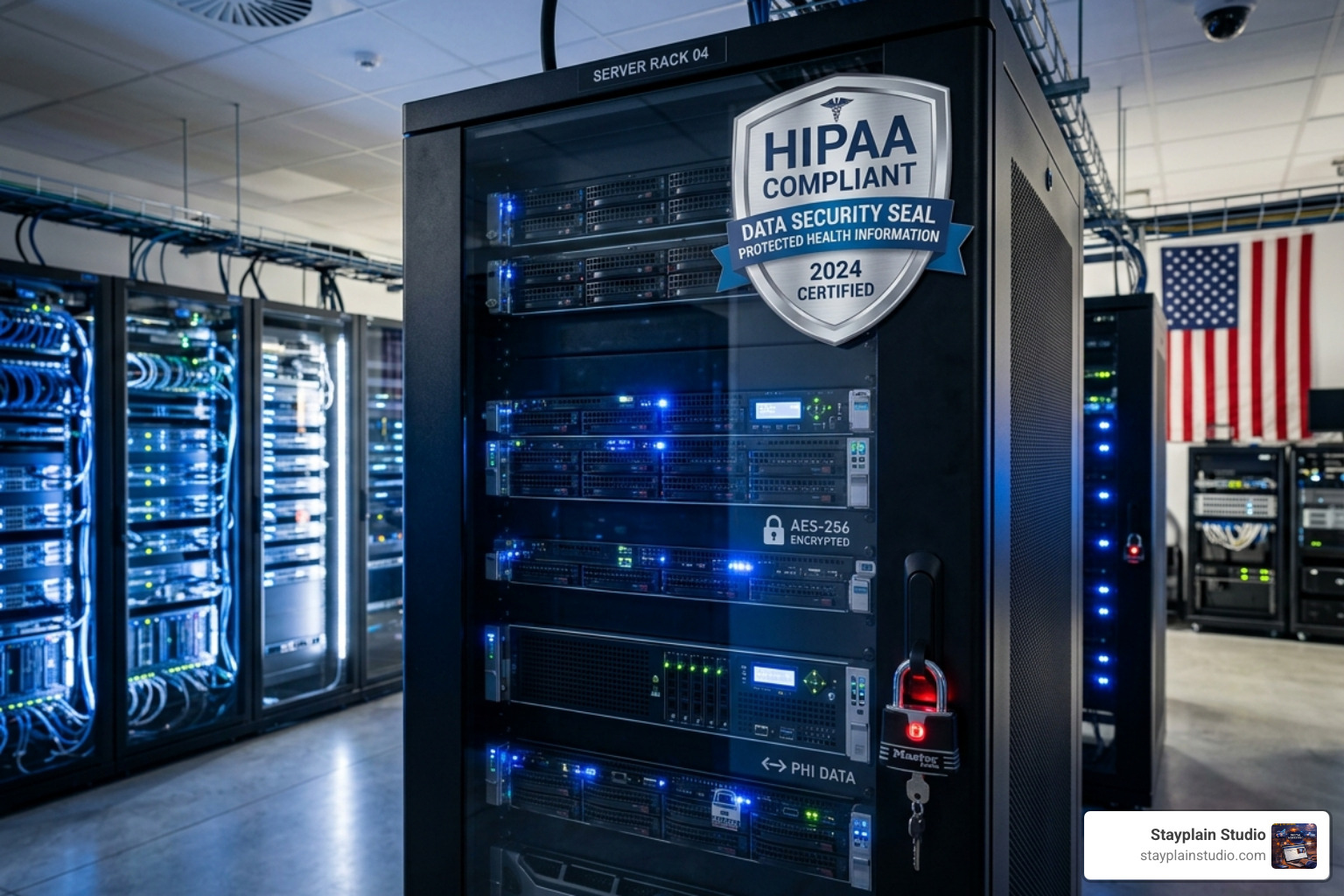
In secure hospital website design, HIPAA is the law of the land. It mandates the protection of Electronic Protected Health Information (ePHI). This includes everything from a patient’s email address on a contact form to their full medical history in a portal.
To be truly compliant, your website must adhere to the Privacy Rule and the Security Rule. This involves more than just tech; it requires Business Associate Agreements (BAAs) with every third-party vendor. At Stayplain Studio, we provide professional website development services that include immutable audit logs, which track exactly who accessed what data and when, providing a transparent trail for regulators.
Secure Patient Portals and Online Booking
The patient portal is the most sensitive part of your digital ecosystem. To keep this area safe, we implement Multi-Factor Authentication (MFA) and Role-Based Access Control (RBAC). This ensures that a billing clerk can see invoices but not surgical notes, and a patient can only see their own records.
We also enforce automatic session timeouts. If a patient leaves their computer at a public library logged into their portal, the site will automatically log them out after a period of inactivity. This level of detail is why we are considered a top custom website design services provider. To see how we've helped other healthcare providers achieve secure and efficient online operations, view our healthcare case studies.
Technical Safeguards Against Cyber Threats
When choosing between a standard Content Management System (CMS) and a custom-coded solution, security is often the deciding factor. While WordPress is incredibly flexible, it requires expert hardening to be safe for hospital use.
| Security Feature | WordPress CMS (Managed) | Custom-Coded (Laravel/Node) |
|---|---|---|
| Vulnerability Risk | Higher (due to plugins) | Lower (controlled code) |
| Patching Speed | Instant (if managed) | Manual/Developer-led |
| DDoS Protection | Via WAF/Cloudflare | Built into Infrastructure |
| Scalability | High | Infinite |
We implement Web Application Firewalls (WAF) to block malicious traffic before it ever touches your server. This prevents common attacks like SQL injections and Cross-Site Scripting (XSS). For those needing wordpress website design in ghana, we use a "security-first" approach, stripping away unnecessary plugins and hardening the core to prevent unauthorized access.
Ongoing Maintenance and Security Updates
A website is not a "set it and forget it" project. It is living software. Hackers are constantly finding new ways to break into systems, which is why regular patch management is vital. We provide ongoing support as a leading website development company in ghana, conducting monthly plugin audits and server-side hardening.
Our maintenance packages include automated backups and a disaster recovery plan. If a server goes down or a breach occurs, we can restore your site to a clean version in minutes. You can explore our full portfolio to see our diverse projects and our commitment to long-term digital health.
Enhancing Patient Trust Through UX and Accessibility
Security and user experience (UX) are two sides of the same coin. A site that feels difficult to use often feels "unsecure" to a patient. Accessibility is a major part of this. Following WCAG 2.1 AA standards isn't just a legal requirement under the ADA; it's an ethical one.
As the best web design company in Ghana, we prioritize inclusivity. This includes high contrast ratios for visually impaired users, screen reader compatibility, and font resizers for elderly patients. When a website is easy to navigate, patients feel more in control, which reduces anxiety and builds visceral trust.
Trust-Building Elements and Credibility Markers
You have 7 seconds to entice a searcher to stay. How do you do it? By displaying trust signals prominently. This includes real portraits of your actual doctors, board certifications, and social proof like patient visit statistics. A sticky "Emergency" button that stays visible as the user scrolls is also essential.
Performance Optimization and SEO for Healthcare
A slow website is a security risk in the eyes of a patient. We optimize for Core Web Vitals and high Lighthouse scores to ensure your site is lightning-fast. Our Website Design Services Package includes comprehensive optimization to ensure your site ranks high for local searches while providing a secure user experience.
The Role of AI in Secure Hospital Website Design
In the current digital landscape, AI is a double-edged sword. While hackers use AI to create more convincing phishing emails, we use AI-powered threat detection to stop them. Intelligent systems can now monitor traffic patterns in real-time, identifying and blocking "bot-like" behavior before a DDoS attack can take your site offline.
AI also enhances the patient experience through intelligent content personalization and automated accessibility tools that can adjust a site's layout based on a user’s specific disability. At Stayplain Studio, we stay at the cutting edge of these technologies to keep our clients ahead of the curve.
Choosing Your Secure Hospital Website Design Partner
Selecting a partner for your hospital's digital front door is a high-stakes decision. You need a team that understands that a website is a clinical asset, not just a marketing tool. Look for a partner with a proven track record in cybersecurity and a deep understanding of healthcare regulations.
At Stayplain Studio, we offer a long-term partnership approach. We don't just hand over a site and disappear; we provide the ongoing maintenance, security updates, and SEO strategies needed to grow your practice safely. We are committed to results-driven, conversion-focused systems that build online growth.
Frequently Asked Questions about Secure Hospital Website Design
What are the essential security features for a hospital website?
Every hospital site must include SSL/TLS encryption, HIPAA-compliant hosting, secure contact forms, Multi-Factor Authentication (MFA) for portals, and regular vulnerability scanning. Additionally, a Web Application Firewall (WAF) and automated backups are critical for defending against modern cyber threats.
How does HIPAA compliance impact website functionality?
HIPAA requires technical safeguards like encryption for any data transmitted or stored. This means your contact forms cannot send PHI via standard email, your databases must be encrypted, and you must have signed BAAs with your hosting and software providers. It also requires detailed audit logs to track data access.
Why is accessibility critical for secure healthcare design?
Accessibility ensures that all patients—including those with visual, auditory, or motor impairments—can access healthcare information. Beyond being a legal requirement (WCAG/ADA), it builds trust. A patient who can easily find information on an accessible site is more likely to trust that provider with their physical care.
Building a Secure Digital Future
A hospital's digital presence is now as important as its physical lobby. Secure hospital website design is the foundation upon which patient trust is built. By prioritizing encryption, HIPAA compliance, mobile responsiveness, and accessibility, you protect both your patients and your institution’s reputation.
At Stayplain Studio, we are your dedicated digital transformation partner, committed to delivering conversion-focused growth through expert healthcare industry knowledge and results-driven design. We build secure technology systems that protect your patients and empower your practice. Ready to secure your hospital's digital future? Contact Stayplain Studio today for a consultation.
[wpforms id="42328"]